
Paint or Rescreen First? The Right Order for a Full Pool Cage Revival
Published October 23, 2026 · By Riley, owner of Pool Cage Revival
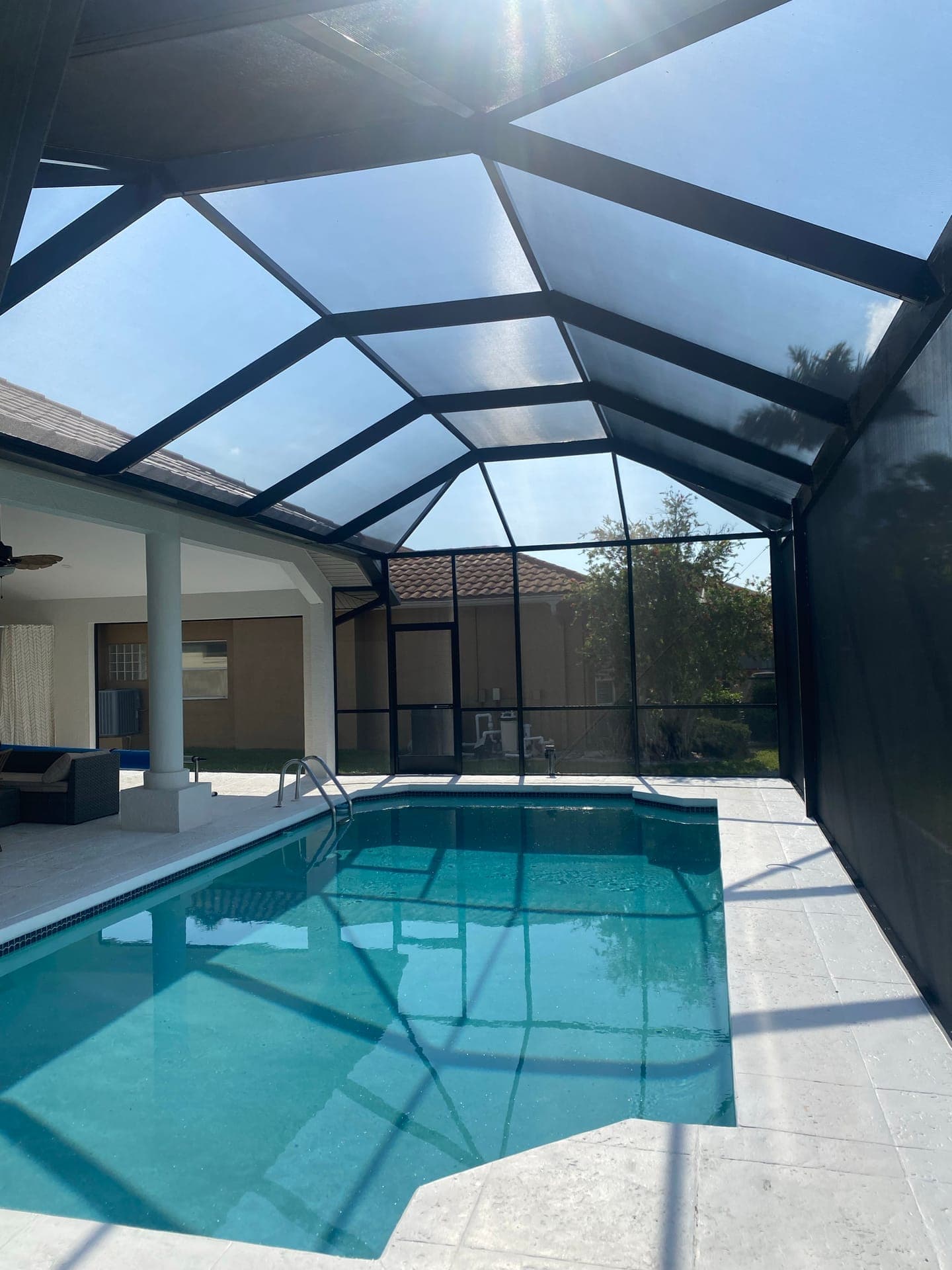
If your pool cage needs both new paint and new screens, the order is simple: remove the old screen, paint the aluminum, then install the new screen after the coating has cured.
I'm Riley, owner of Pool Cage Revival. I follow this sequence because it gives me access to the frame for preparation and painting, while keeping new screen away from overspray, sanding dust, and other work that could damage it.
It's the practical approach I use for a full pool cage restoration in Southwest Florida, including projects in Cape Coral, Fort Myers, Naples, and Estero.
Why the screen comes off before painting
Screens cover parts of the aluminum frame. Leaving them in place can make it harder to reach the full surface, including edges and areas around the frame members. For a full repaint, removing the old screen gives me room to clean and prepare the aluminum before coating it.
It also avoids putting new mesh through the messier parts of the job. Pressure washing, sanding, and painting can leave water, dust, or paint mist in places you do not want it. Aged screen may be brittle or torn already, but even new screen can be stained or damaged if it is installed too soon.
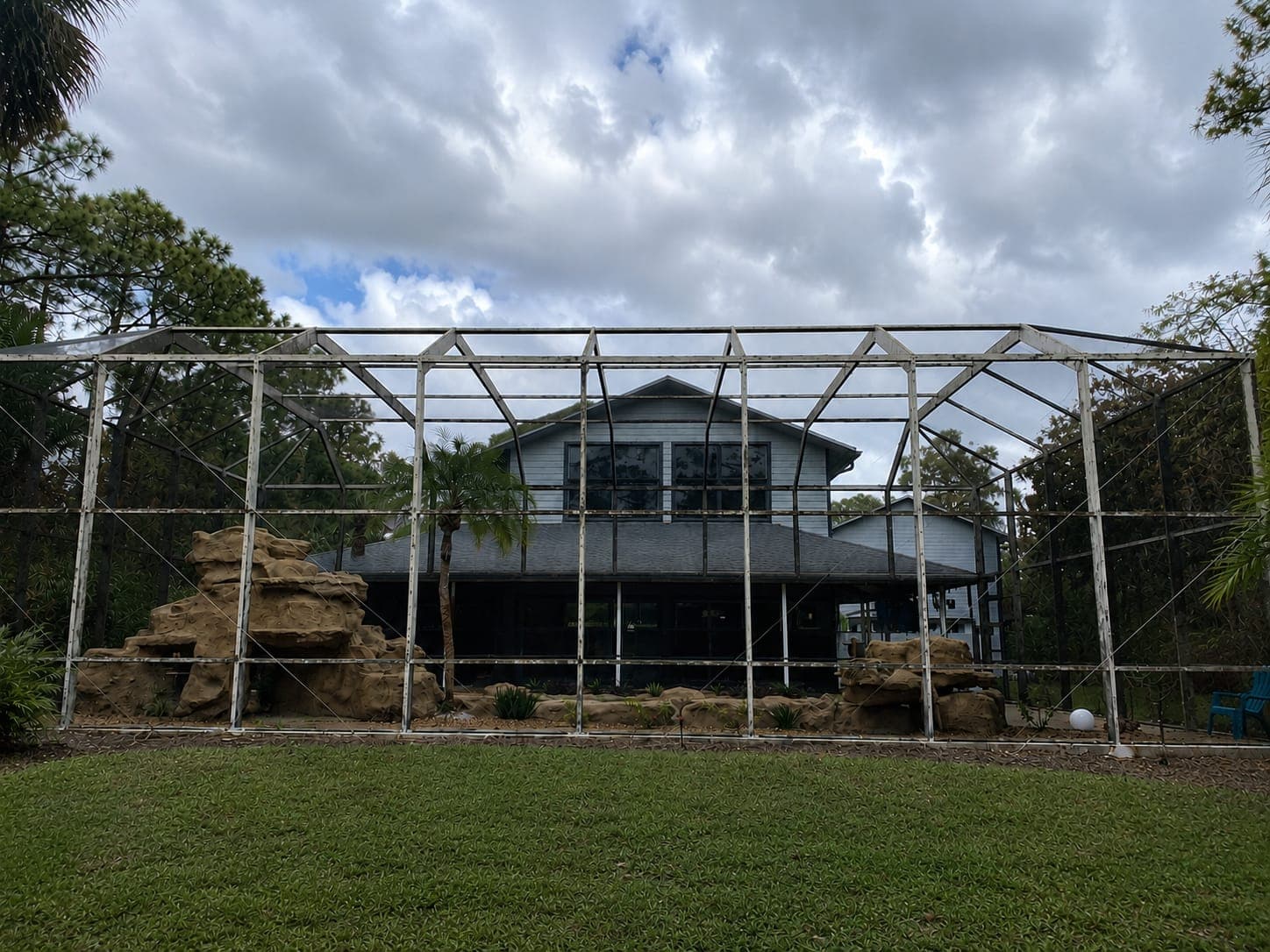
Why new screen goes on last
Fresh screen should be installed on a prepared, painted frame, not treated as a surface to work around during painting. If you rescreen first and paint later, the new mesh has to be masked and protected while I wash, sand, and coat the frame.
Masking can help protect screen, but it does not make the work as straightforward as installing it last. The mesh can catch paint mist or sanding dust, and handling ladders and tools around it creates a risk of snags or other damage. Masking around each panel can also make it harder to reach all the aluminum cleanly.
The simplest way to avoid those problems is to remove the old screen before the frame work and wait to install the new panels until after painting and curing are complete.
What causes an older cage to look worn?
In Southwest Florida, pool cages face strong sun and UV exposure, along with humid conditions and seasonal storms. Over time, sun exposure can fade the frame's appearance. Aged coatings may become dull, chalky, or start to peel, especially when the surface was not properly prepared before an earlier paint job.
Storms can also bring wind-driven rain and debris that may tear or loosen screens. That does not mean every worn cage needs the same work. The frame and screens should be looked at separately: paint addresses the aluminum, while rescreening replaces worn or damaged mesh.
If the frame appears loose or damaged, I'll point that out during the visual inspection. Paint and screen work do not repair a structural problem.
The full revival sequence
A full revival is a series of steps. Each one prepares the enclosure for the next.
1. Inspect the cage and remove the old screen
I start with a visual inspection of the enclosure and its existing screen. Then I remove the old screen so I can reach the aluminum frame for cleaning, sanding, and painting.
2. Pressure-wash the enclosure
With the screen removed, I pressure-wash the frame to clear away grime and buildup. This makes it easier to see the surface condition and continue with preparation.
3. Sand and wipe down the aluminum
Next, I sand the aluminum to prepare the surface. I then wipe it down with acetone as part of the final preparation before painting. These steps matter because a coating needs a clean, prepared surface to adhere properly. Rushing them can undermine the work that follows.
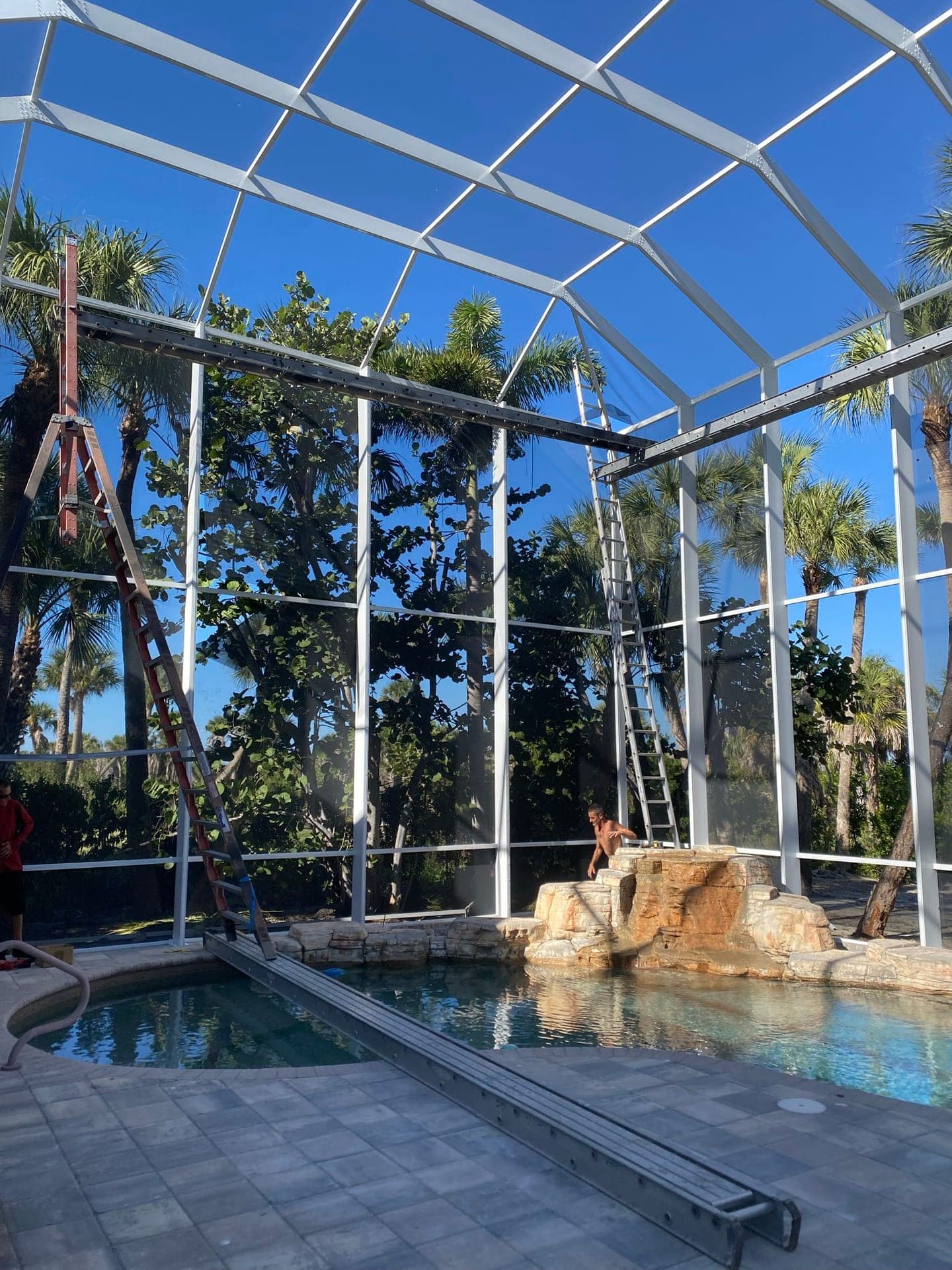
4. Mask and protect nearby surfaces
Before I paint, I mask and protect the pool, deck, home, and surrounding areas. This is a careful step, not an afterthought. It helps contain paint and keeps the work area protected while I coat the frame.
5. Apply the paint system
I use Sherwin-Williams DTM acrylic coatings for pool cage painting. DTM means “direct-to-metal.” The coating is intended for metal surfaces; the frame still needs proper preparation first. You can read more in Sherwin-Williams' Pro Industrial DTM Acrylic Coating information.
Weather affects scheduling in Southwest Florida. Rain, humidity, and changing conditions can affect when painting can proceed and when the next step is appropriate. I follow the coating manufacturer's instructions and account for actual conditions before installing new screen rather than rushing the sequence.
6. Install the new screen
Once the paint is ready for the next step, I install the selected screen material. Options include 18x14 standard pool mesh, no-see-um mesh for smaller insects, and heavy-duty Super Screen for added strength and durability. The right choice depends on what matters most for your enclosure.
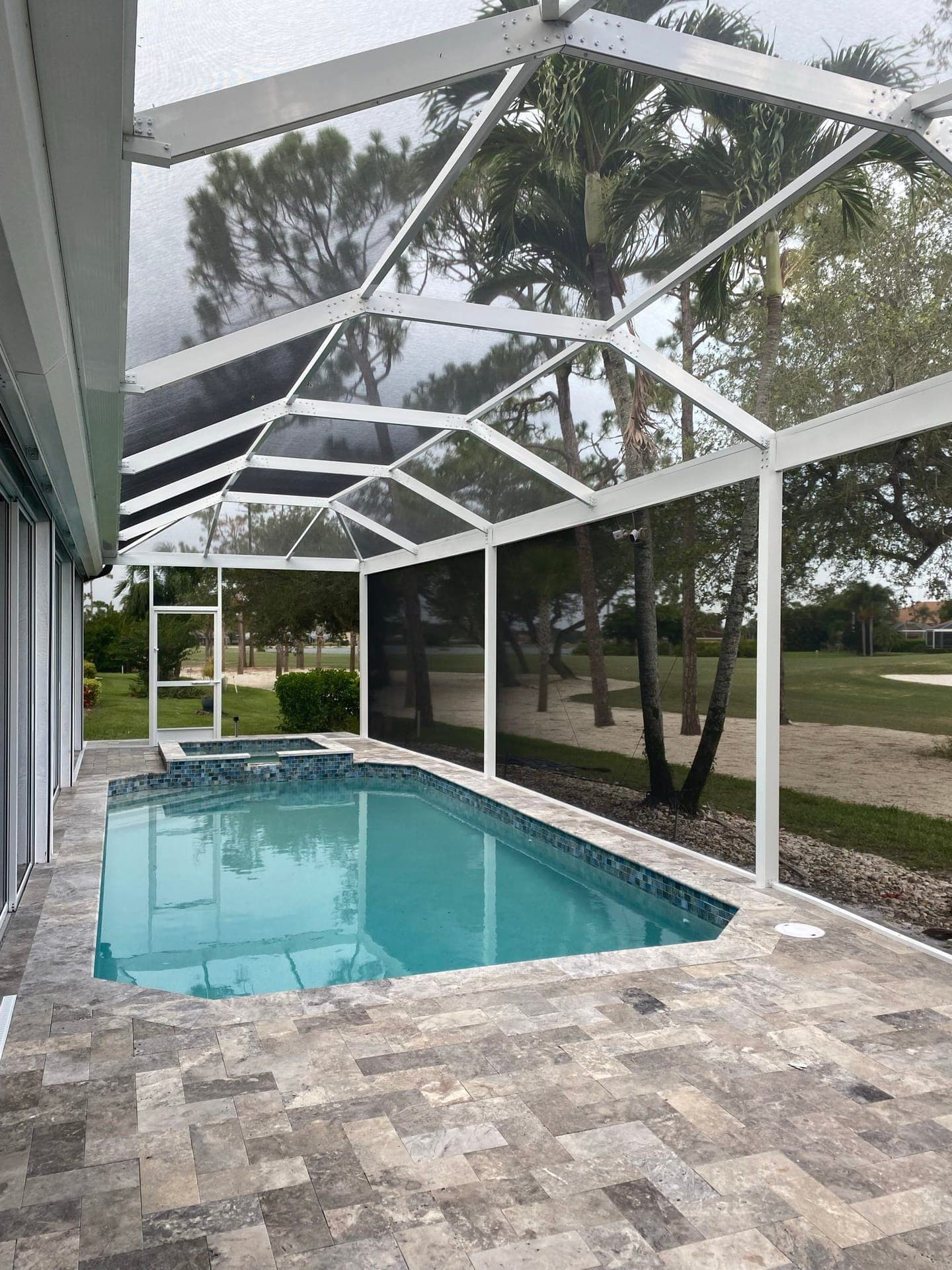
Choosing the right screen for your home
Standard 18x14 mesh is a common option for pool enclosures. No-see-um mesh has a finer weave to help block tiny insects. Super Screen is a heavier-duty choice for homeowners looking for added strength and durability.
You do not have to choose the same material for every project. I can explain the available options and help you consider your needs before the work begins.
When do painting and rescreening need separate plans?
Not every enclosure needs both services. If the frame looks sound and only a few panels are damaged, individual screen panel replacement may be enough. If the mesh is worn throughout but the frame does not need painting, full rescreening may be the practical choice.
If you are considering painting pool cage aluminum and replacing the screen at the same time, I'll look at both conditions before recommending a scope. The visual inspection helps clarify what needs attention and what does not.
A clear next step
If you're unsure whether your cage needs painting, rescreening, or both, I offer free visual cage inspections and estimates. I'll review the visible condition, explain the work I recommend, and give you straightforward information without pressure.
You can request a free estimate or learn more about Pool Cage Revival. I work directly with homeowners across Cape Coral, Fort Myers, Naples, Estero, and nearby Southwest Florida communities.
When both the frame and screens need attention, remember the order: old screen out, prepare and paint the aluminum, let the coating cure, then install the new screen.
Not sure what your pool cage needs?
I offer free visual cage inspections and free quotes across Southwest Florida.
Request My Free Inspection & Quote